


Limited edition vs open edition: it’s a decision every artist selling prints has to make. You’ve finished a piece you’re proud of, and people want to buy it. Before you print a single copy, you need to decide how you’ll sell it. It shapes how you price your work, how collectors see it, and how much care each print needs.
An open edition can be printed for as long as there’s demand. A limited edition caps the number, and that promise to your buyers stands for good. Both have a place in an artist’s range, and many artists sell both.
In this guide, we explain what each type of edition means and how they compare. We also cover what changes when you print the edition yourself, from paper choice to signing and numbering.
What is an open edition print?
An open edition has no fixed number. You can keep printing it for as long as people want to buy it, in whatever quantity suits you.
That flexibility makes open editions the most accessible way to sell your work. Prices can stay lower, you can print to order rather than holding stock, and a popular design never has to sell out. Many artists sign open edition prints, but they’re not numbered, because there’s no total to count against.
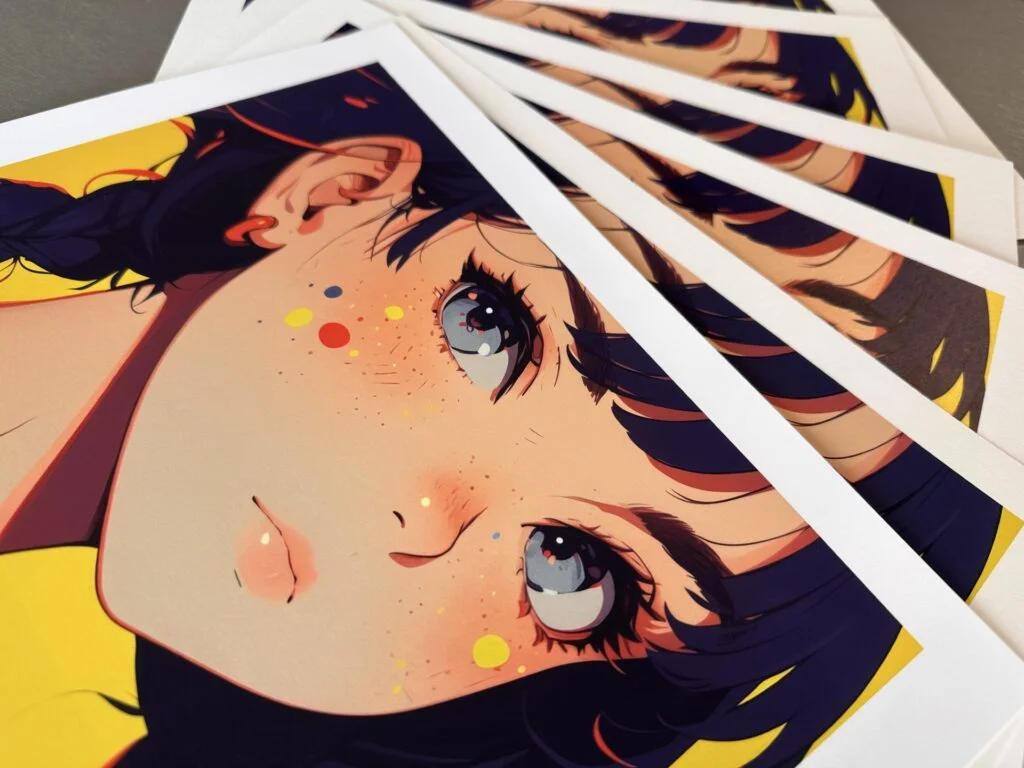
Because you may reprint an open edition many times, consistency still matters. Choose a paper you can keep coming back to, so a print made next year matches one made today. For cost-effective open editions, a matt paper like Matt Plus 240 keeps costs down, while our Fine Art papers suit work you want to price higher. If you’re not sure where to start, a PermaJet Test Pack lets you compare papers with your own artwork before you commit.
What is a limited edition print?
A limited edition has a fixed number of prints, decided before you start printing. Once every print in the edition has sold, that image isn’t printed again in the same form.
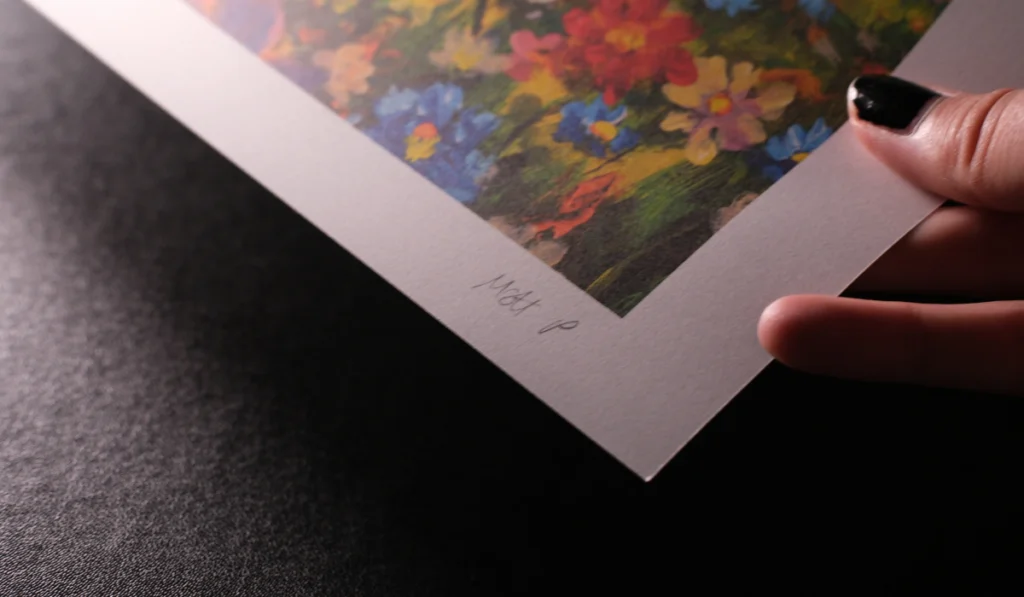
Each print is usually signed and numbered by hand in pencil, often in the bottom margin. The number shows the print’s place in the edition and the total size, so 12/50 is the twelfth print of fifty. Many artists also include a certificate of authenticity with each print.
How many prints should be in a limited edition?
There’s no fixed rule. Smaller editions of 10 to 25 suit larger or higher-priced work, while editions of 50 to 250 are common for more affordable prints. The smaller the edition, the more each print tends to be worth to a collector, so set the number with your pricing in mind.
What is an artist proof?
Artist proofs are marked “AP” instead of a number and sit outside the main edition. Traditionally they were the prints an artist made to check the result before printing the edition. Today many artists keep them or sell them at a higher price. A common guide is to keep them to around 10% of the edition size.
The promise behind a limited edition
A limited edition is a promise to your buyers. Don’t add prints once the edition is set. If you later print the same image at a different size, label it clearly as a separate edition.
Collectors also expect a limited edition print to last, so archival quality matters. Papers from The Heritage Range, such as Smooth Rag 310, are made to keep your prints looking as they did on day one for generations to come. We look at each one in “Paper for limited editions” below.
Limited edition vs open edition: the key differences
Both editions can use the same artwork, the same printer and the same care. What changes is the promise you make to the buyer, and that affects everything from price to paper.
| Open edition | Limited edition | |
|---|---|---|
| Number of prints | No limit, printed to demand | Fixed number, set before printing |
| Signing and numbering | Sometimes signed, never numbered | Signed and numbered, e.g. 12/50 |
| Price | Lower, more accessible | Higher, reflects scarcity |
| Reprints | Any time | Never in the same form once sold out |
| Sizes | Often several sizes | Usually one size per edition |
| Paper | Consistent paper, chosen to suit your price point | Archival Fine Art paper |
| Best for | New buyers, popular designs, markets | Collectors, key works, gallery sales |
Many artists offer both. An open edition brings new buyers in at an affordable price, while a limited edition of the same or a different work gives collectors something to invest in.
Which should you choose?
There’s no right answer for every artist. It depends on where you are with your work, who’s buying it, and how much time you want to spend printing.
Choose an open edition if:
- You’re starting out and building an audience
- You want to keep prices accessible
- You sell at markets, fairs or online shops where buyers decide quickly
- You’d rather print to order than plan an edition in advance
Choose a limited edition if:
- You have an established following or collectors who already buy your work
- The piece is one of your strongest, and you want to price it to match
- You sell through galleries, exhibitions or your own website
- You’re happy to commit to an edition size and stick to it
Or offer both
Many artists run open and limited editions side by side. A common approach is to offer a popular design as an affordable open edition, and keep your key works as small limited editions on archival paper.
If you sell the same image as both, be clear about it. Make the limited edition distinct, for example a larger size, a different paper or hand-finished details. Some collectors prefer a limited edition image that isn’t available any other way, so let buyers know what they’re getting.
Printing a limited edition yourself
When you print your own edition, every print has to match. Print 1/50 and print 50/50 might be made months or even years apart, but a collector should never be able to tell the difference.
Keep every print consistent
- Use the same printer, inks and paper for the whole edition.
- Print with the correct ICC profile for your paper and printer. For the closest match, our free custom ICC profiles are made for your specific setup.
- Save the final print file and note your print settings, so you can repeat them exactly.
- Keep one approved print as a reference to check each new print against.
- Consider buying enough paper for the full edition at the start.
Signing and numbering
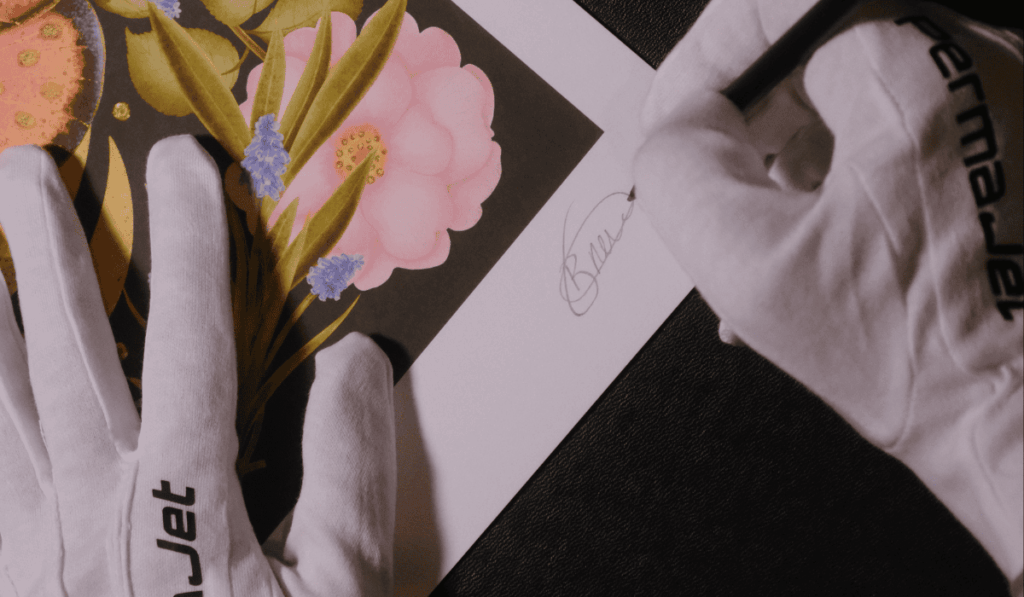
Sign and number each print in pencil, in the bottom margin below the image. Graphite pencil is the standard choice because it won’t fade or bleed into the paper the way some inks can. A common layout is the edition number on the left, your signature on the right, and sometimes the title in the centre.
Remember to leave enough border when you print so there’s room to sign.
Keep a record
Keep a simple log of each print in the edition: its number, the date printed, the paper used and who bought it. It makes certificates of authenticity easy to produce, and it means you can answer any collector’s question about their print.
When prints are finished, store them flat and away from light until they sell. For posting or longer-term storage, a PrintSafe Storage Tube protects them from creasing and damage.
Want the full workflow? The Knowledge Vol 3 is our FREE downloadable eBook to printing your own work. It takes you through print settings step by step, then how to finish, sign and store your editions so every print matches the first.
Choosing paper for open and limited editions
The paper you choose tells the buyer something about the print. For an open edition, the priorities are consistency and cost. For a limited edition, they’re longevity and the feel of the print in the hand.
Paper for open editions
Choose a paper you can rely on for repeat printing, at a cost that suits your pricing.
- Matt Plus 240: a cost-effective matt paper for affordable prints and larger runs
- Portrait White 285: a bright white base with a subtle texture, which suits bold colour and illustration
- Photo Art Silk 290: a silk surface between matt and gloss, for prints that need extra depth and colour
Not sure which to pick? The PermaJet Artist Essentials Test Pack lets you print your own artwork on a selection of our art papers and compare them side by side before you commit.

Paper for limited editions
Collectors expect a limited edition to last, so choose archival paper. The four Rag papers in our Heritage Range are 100% cotton and OBA-free. Optical brightening agents (OBAs) make paper look whiter at first but break down under UV light, which can shift the tone of a print over time.
Smooth Rag 310: a smooth surface for fine detail and digital artwork
Etching Rag 310: a rough textured surface with the character of traditional printmaking paper
Watercolour Rag 310: a textured surface that suits watercolour and painting reproductions
Baryta Rag 310: a satin baryta surface, for richer blacks and more depth
Match the paper to the artwork
As a starting point, smooth papers suit illustration, digital art and fine linework, while textured papers suit painting, watercolour and pastel reproductions. The best way to decide is to print your own artwork and compare. The PermaJet Artist Essentials Test Pack includes a selection of papers recommended for art prints, and the PermaJet Heritage Range Discovery Pack covers the full Heritage Range.
Start with the edition that fits you now
You don’t have to choose one edition for life. Many artists start with open editions to build an audience, then move their strongest work into small limited editions as collectors find them. Whichever you choose, the paper and the printing should match the promise you’re making.
Start by testing a few papers with your own artwork. Then, when you’re ready to print an edition you can stand behind, The Knowledge Vol 3 walks you through every step, from print settings to signing, numbering and storing your finished prints.
There’s no fixed rule. Editions of 10 to 25 suit larger or higher-priced work, while editions of 50 to 250 are common for more affordable prints. Smaller editions usually make each print more valuable to collectors, so set the size alongside your pricing. Once it’s set, never add more prints.
An artist proof is a print that sits outside the numbered edition and is marked “AP” instead of a number. Traditionally, artists made them to check the result before printing the full edition. Today many artists keep them or sell them at a higher price, usually limiting them to around 10% of the edition size.
The Knowledge Vol 3:
Paper is one part of a bigger process. Our new ebook, The Knowledge Vol 3: The Complete Guide to Art Prints, covers the rest of it.
Written for artists reproducing and selling their own work, it takes you from capturing the original through to the finished, framed print. Scanning and photographing artwork, getting colour accurate, choosing a printer, print settings step by step, and how to finish, sign and store your editions.
It’s free, and it’s the guide we wish we’d had when we started printing.