


How to sell art prints people value
You’ve created the original. The question is how to turn it into prints people will pay for, and come back to buy again. If you want to sell art prints, the quality of the reproduction is where most of the value is made or lost. A print that feels substantial in the hand, matches the colours of your original and won’t fade on the buyer’s wall is worth more than one that doesn’t. Get those things right, and you’re charging for the quality of the print as well as the artwork.
In this guide, we cover how to get your artwork print-ready, what buyers look for in a print, how to choose premium Fine Art paper and get colour right, and how to finish and present your work. We also look at other ways to earn from your art beyond wall prints.
Getting your artwork print-ready
Your prints can only be as good as the digital copy of your original. Even the best printer and premium Fine Art paper can’t rescue a low-quality file, so it’s worth getting this step right.
- Scanning or photographing your original
Scanning suits flat artwork that isn’t too large. A flatbed scanner gives even lighting and sharp detail from edge to edge, which works especially well for drawings and detailed paintings. Photographing is the better choice for large pieces, textured work, or anything mounted or fragile. Keep the camera parallel to the artwork, and light it flat and evenly, with no bright spots, shadows or glare.
- Resolution
Aim for 300ppi at your final print size. If you plan to print larger than the original, capture at a higher resolution to match. For example, an A5 original printed at A4 needs twice the resolution. Upscaling can help a little, but it’s no substitute for capturing enough detail in the first place.
- Cleaning up the file
Whichever method you use, expect to make some adjustments before printing. Remove any dust or marks, crop and straighten the image, and make small corrections so the colours match your original. Save the finished file as a TIFF, and keep it as your master copy for printing.
- The Knowledge Vol 3 Covers this in more detail, including scanner settings, file formats and when to re-scan instead of upscaling.
What makes a print worth paying for?
Not every print is a Fine Art print. A standard print, like a mass-produced poster, is made for the moment, with little thought for materials or how long it will last. A Fine Art print uses archival materials and a colour-managed process, so it stays true to your original and keeps looking right. That difference is where your value lies. Buyers pay more for a print they can see and feel is made to last, and it raises how they value your work as a whole. Printing on Premium Fine Art Paper is the first step.

What is a giclée print?
You’ll often see “giclée” used to describe high-quality art prints. The word comes from the French for “to spray”, and it has become shorthand for an inkjet print made to last. For a print to be called giclée, it should be:
- Printed on a pigment inkjet printer with seven or more inks
- Printed on acid-free premium Fine Art paper with a base weight of 250gsm or more
- Printed on a paper that has passed a Blue Wool accelerated UV fade test
You don’t have to sell giclée prints. But meeting the standard raises both the quality of your prints and the price you can ask for them. Some of the papers mentioned in this blog might be below the 250gsm, so just keep an eye out for that when considering your paper types.
What buyers actually want from a print
If you want to sell art prints consistently, understanding what your buyer is looking for shapes every choice you make, from premium Fine Art paper to packaging.
A buyer isn’t just paying for an image. They’re paying for something they’ll live with for years, and they’re comparing it with cheaper, mass-produced prints. What makes them choose yours is quality they can see and feel, and the confidence that it will last. Get that right, and a one-off sale often becomes a repeat buyer.
- A print that feels like quality
The first thing a buyer notices is how the print feels in their hands. A heavyweight cotton rag print such as Smooth Rag 310 or Etching Rag 310 signals quality before they’ve fully taken in the artwork. It also resists creasing, so it arrives flat and stays that way. A textured surface can echo the original, too: a watercolour on a Watercolour-style surface feels much closer to the real thing.
- Colours that match what they saw
Buyers who receive a print that looks nothing like the listing image or the original are a real problem in the market. Accurate colour isn’t a given, so it sets you apart. It builds trust, and it shows your artwork the way you created it. Before you list a print, compare a test print with your original in good daylight. Photograph the finished print for your listing rather than relying on the digital file, so buyers see what they’ll actually receive. It’s also worth mentioning the paper’s tone, as a natural white base looks softer than a bright white one. We cover how to get colour right further down.
- A print that will last
Many buyers want to know their print won’t fade. Being able to explain what “archival” means, and back it up with your choice of premium Fine Art paper, gives them confidence. The four Rag papers in our Heritage Range are 100% cotton and OBA-free, made for prints that need to last. Be specific in your listings. Name the paper, say whether it’s acid-free and OBA-free, and mention that you print with pigment inks if you do. Simple care advice helps too: keep the print out of direct sunlight, and frame it behind UV-protective glass or acrylic.
- A print that’s ready to frame
Most prints that are sold end up in a frame. Think about how the surface finish, flatness and size of your print will behave behind glass, and choose standard sizes where you can, so buyers can find a frame easily. A matt surface helps here, as it removes glare once the print is on the wall. Leave a white border around the image too. It gives room for your signature and makes the print easier to mount. Let prints dry fully, for around 24 hours, before they’re framed. Telling buyers which frame size the print fits saves them guesswork and makes the sale easier.
- Choosing premium Fine Art paper for art prints you sell
Paper is a creative decision as much as a technical one. It changes how your artwork looks, how the print feels and what you can charge for it.
- Weight and surface
Weight is measured in gsm (grams per square metre). A heavier paper feels more substantial, resists creasing and warping, and sits better in a frame. Higher weights also tend to come with better coatings or fibres, such as cotton rag. The surface can help your print feel close to the original. A watercolour-style texture suits watercolours, a textured surface brings out brushwork in paintings, and a smooth surface keeps the focus on fine detail in digital and pencil work. Most art prints suit a matt surface, which removes glare on the wall and shows soft tonal gradation.
Match the paper to your artwork


Portfolio Rag 220
Smooth cotton matt, mid-white. For subtle Fine Art pieces where a lighter weight suits.
Ideal for: subtle Fine Art pieces where a lighter weight suits
Note: at 220gsm, it falls below the 250gsm giclée threshold.

Photo Art Silk 290
Textured matt with a silk sheen. For rich, dimensional artwork with a premium feel.
Ideal for: rich, dimensional artwork with a premium feel

Portrait Rag 305
Lightly textured cotton matt. Suits detailed pencil work and vibrant textured paintings.
Ideal for: detailed pencil work and vibrant textured paintings

Etching Rag 310
Rough textured surface, natural white. Gives the character of traditional printmaking paper, and suits bold, textured work.
Ideal for: printmaking-style work and bold, textured pieces

Smooth Rag 310
Smooth surface, natural white. Keeps the focus on fine detail in digital artwork, illustration and pencil drawings.
Ideal for: digital art, illustration and fine pencil detail

Baryta Rag 310
Satin baryta surface, natural white. Adds depth and richer blacks, for artwork with strong contrast.
Ideal for: artwork with strong contrast and deep blacks

Watercolour Rag 310
Watercolour-style texture, natural white, 100% cotton and OBA-free.
Ideal for: watercolour reproductions and truly archival editions

Museum Heritage 310
Naturally textured matt, mid-white, made from a cotton and alpha cellulose mix. Brings out brushwork, with a premium Fine Art feel.
Ideal for: textured brushwork with a premium Fine Art feel
Note: For limited editions, the four Rag papers in our Heritage Range are 100% cotton and OBA (free from optical brightening agents).
Bright white or natural white?
Printers don’t print white ink, so the white of your print is the white of the paper. Natural white papers give a softer, more neutral look that suits most Fine Art pieces, while bright white papers help colours pop in vibrant, graphic work. Bright white papers often get their whiteness from OBAs (optical brightening agents). These break down slowly over time, which can make a print look yellower. For open editions sold on sites like Etsy, this isn’t usually a concern. For limited editions and gallery work, an OBA-free paper is the safer choice.
ArtSure approved Fine Art paper
We’re members of the Fine Art Trade Guild, and a number of our premium Fine Art papers are ArtSure approved, tested by independent labs for archival stability. Artists can join the scheme too, which lets you show buyers your prints are made with approved materials. Not sure where to start? A PermaJet Test Pack lets you print the same artwork on several papers and compare them side by side. The PermaJet Artist Essentials Test Pack includes our most popular papers for artists.
Getting colour right in your prints
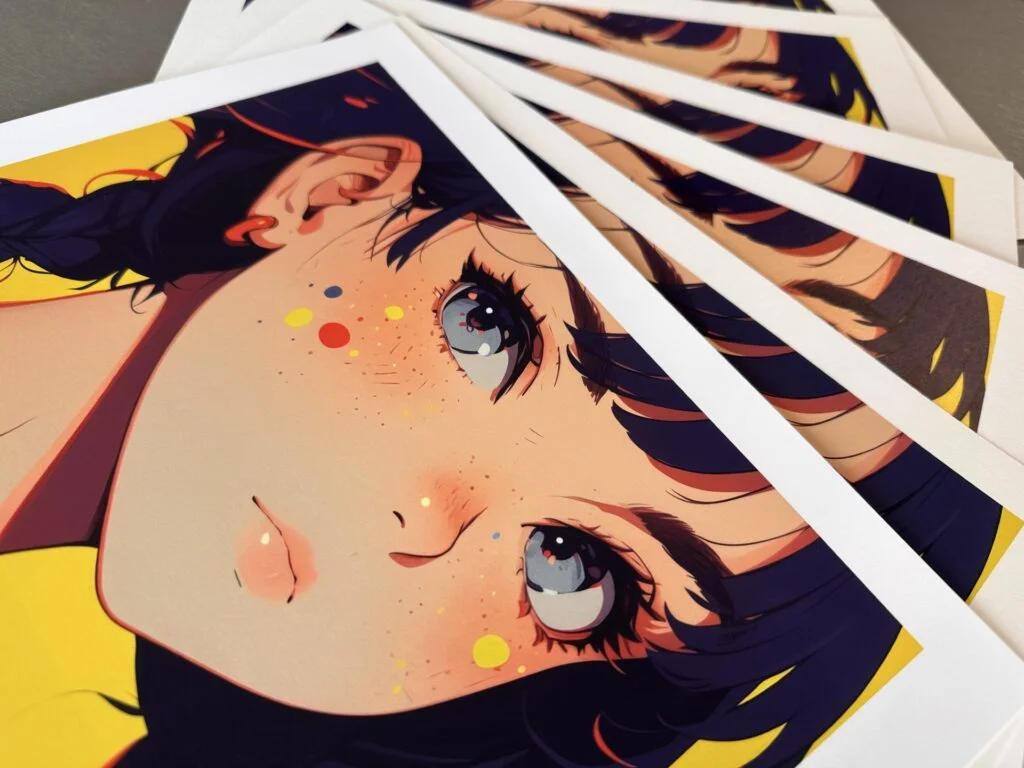
Colour accuracy is one of the biggest differences between a print that sells and one that gets returned. A print will never look exactly like your screen, because a screen gives off light and paper reflects it. But with the right workflow, you can get as close as is technically possible, every time.
- Calibrate your monitor
Your monitor is your preview of the final print. If it isn’t accurate, your prints won’t match what you expect, however many times you adjust them. A calibration tool sets your screen’s brightness, warmth and colour to an industry standard, giving you a reliable reference point for everything else. If you don’t have a calibration tool, you can make small adjustments to your digital artwork after a test print, such as brightening it or adding warmth. Calibrating is still the more reliable option where you can.
- Use the right colour space
For print: work in Adobe RGB. It holds more colour information than sRGB, particularly in greens and blues, which a professional inkjet printer can reproduce.
- For your online listings
Export in sRGB. It’s the standard for websites and social media, so buyers see predictable colour on every screen. This matters when you sell, because the image on your website or shop is what the buyer compares the print against.
- Print from editing software
Opening your artwork in a basic preview app and pressing print won’t give you consistent results. Software like Adobe Photoshop, Lightroom or Affinity Photo lets you turn off the printer’s own colour management and use an ICC profile instead.
- Use an ICC profile
An ICC profile tells your printer how to reproduce colour on a specific paper. Without one, the printer has to guess. With the right profile for your printer and paper combination, your results are consistent and predictable. When you’ve spent time getting the colours right in your artwork, it makes sense to put the same care into your prints.
You can download ICC Profiles for all our papers. For the closest match, our Free Custom ICC Profiles are made for your specific printer.
Limited or open edition?
How you sell your artwork affects what you can charge for it. Most artists selling prints choose between two approaches, and many use both.
Open edition: you reproduce the same artwork as many times as you like, with no limit. It keeps prices accessible and suits popular pieces, markets and online shops.
Limited edition: you print a fixed number, for example 50, then stop. Each print is usually signed and numbered, and can come with a certificate of authenticity. That scarcity means you can charge more.
A limited edition is where print quality matters most. Buyers are paying for something that should feel special in the hand and last for decades, so it’s worth using your best archival premium Fine Art paper.
For a full breakdown of edition sizes, artist proofs and how to choose, read our guide to Limited Edition Vs Open Edition Prints.
Finishing and presenting your prints
How a print is finished and handed over is part of what the buyer pays for. These steps protect the print and make it feel like a finished piece of work.
- Let your prints dry
Many papers feel dry within minutes, but it’s best to leave prints for around 24 hours before handling or framing them. Inks contain water and solvents that need time to evaporate. If a print goes behind glass too soon, residue can form on the glass or the paper can cockle.
- Coating your prints
A protective coating, such as a spray or liquid varnish, helps protect a print from fading, moisture, scratches and fingerprints. Spray coatings work well on most cotton rag prints, while a liquid varnish applied with a foam roller gives more even coverage on textured surfaces. Canvas prints also benefit from a liquid varnish, which adds flexibility and helps prevent cracking when the canvas is stretched. Coatings aren’t recommended on gloss or lustre papers, as they can affect the image quality.
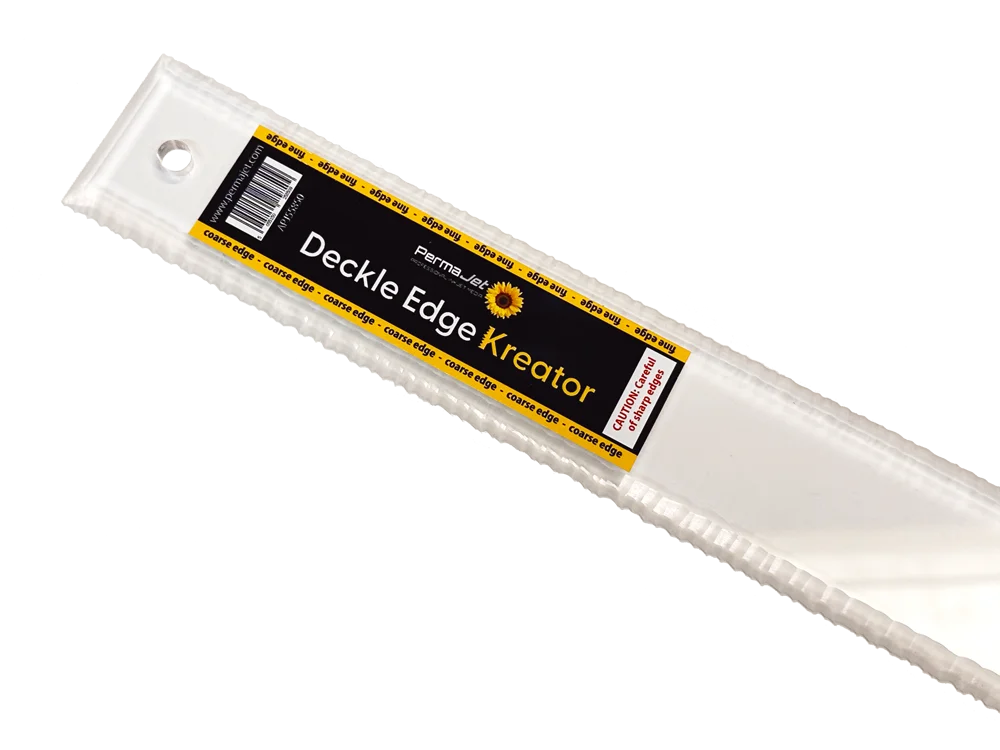
Trimming and deckled edges
For trimming single prints, a rotary trimmer gives more accuracy and control than a guillotine. For a more traditional, handmade finish, a deckled edge gives the print a soft, uneven border that suits many art styles. Our Deckle Edge Kreator makes it quick to do.
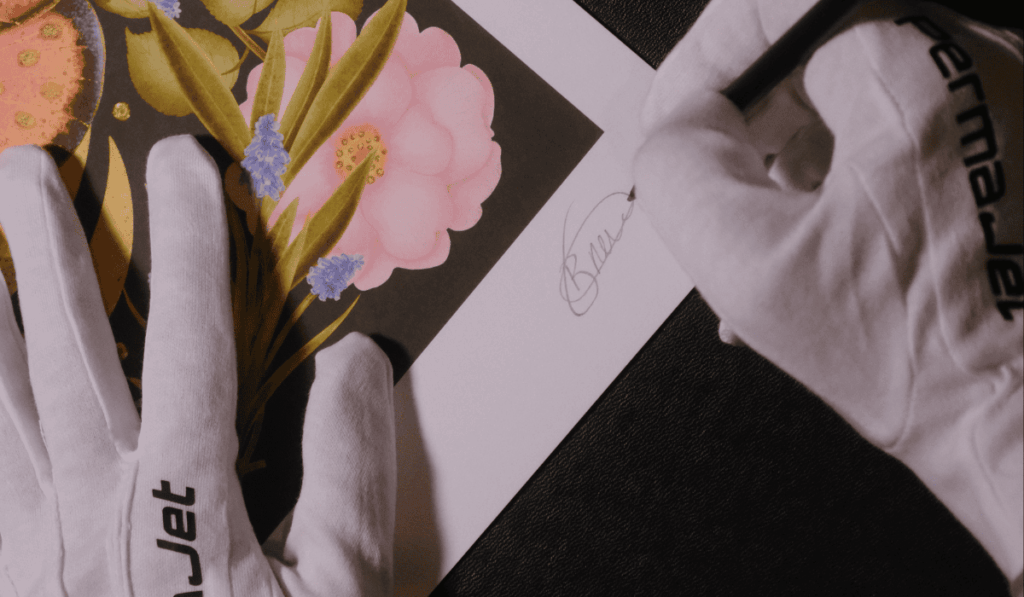
Signing your prints
Sign in pencil, in the lower margin below the image. The usual layout is the edition number on the left (for limited editions), the title in the centre if you want it, and your signature on the right. A soft pencil is archival and won’t bleed into the paper. If you prefer a pen, use an archival pigment pen. If your print is mounted, sign the print, not the mount. Mounts can be replaced, and your signature should stay with the artwork.
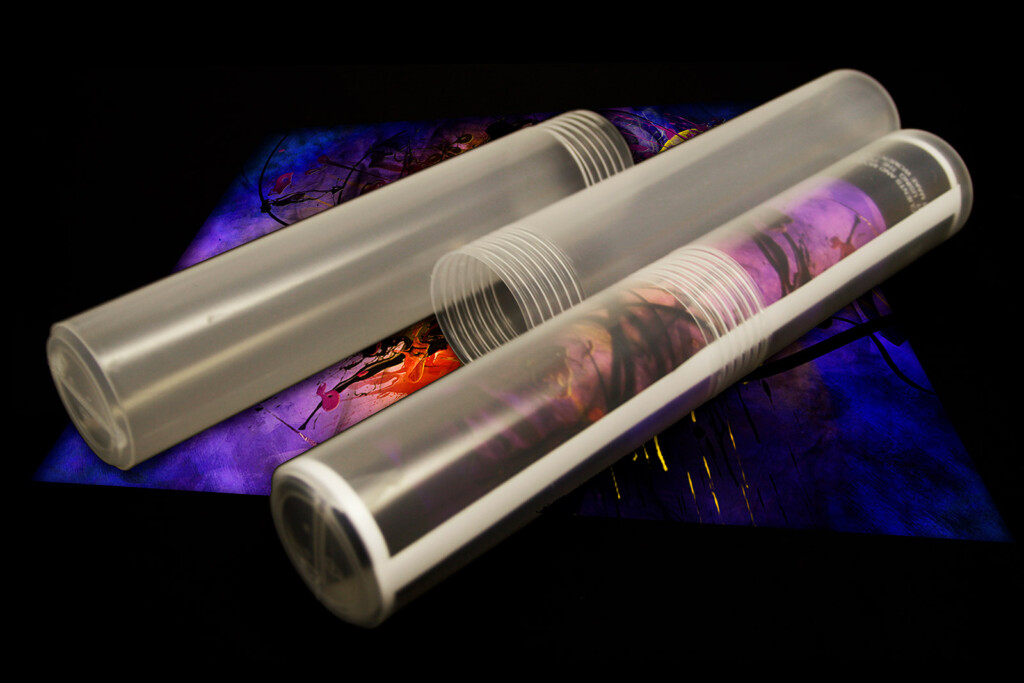
Storing and sending your prints
Store finished prints flat in a cool, dry, dark place, ideally at 40 to 50% relative humidity. Use acid-free tissue or glassine between prints, and keep them in archival sleeves or acid-free boxes. Avoid PVC sleeves, which can damage prints over time. For posting, a PrintSafe Storage Tube protects prints from creasing and damage on the way to your buyer.
More ways to earn from your art
Wall prints aren’t the only way to sell your artwork. Smaller, lower-priced products give buyers more ways in, and they’re a natural fit for markets, fairs and online shops.

Greetings cards
Print your existing artwork onto cards, or create seasonal pieces in your style specifically to sell as cards. Our Pre-Creased Inkjet Greetings Cards make it simple to print them at home.
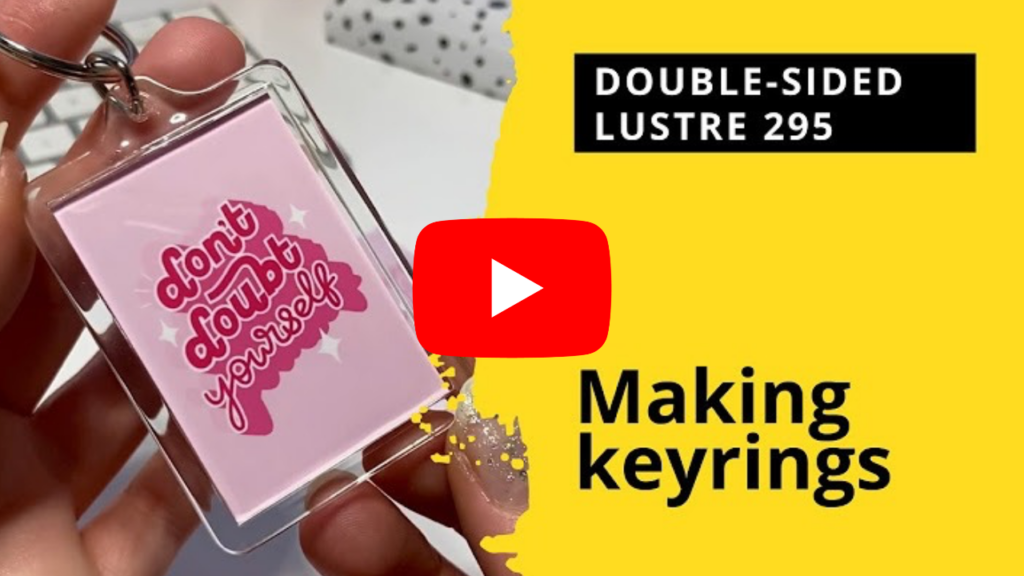
Keyrings and small gifts
For craft markets and sites like Etsy, small prints of your illustrations in blank keyring inserts are a low-cost product that can introduce new buyers to your work.

Postcards
Postcards aren’t just for holidays. They’re an affordable way to sell smaller versions of your artwork, and they work well as add-ons alongside a larger print.

Books and portfolios
A handmade book or portfolio of a whole collection lets buyers own a set of your work, not just a single piece. Our SnapShut Folio makes it easy to present a set of prints, and a double-sided paper such as Double Sided Matt 250 lets you print on both sides of each page.
Where to sell your art prints
Once your prints are ready, the next step is putting them in front of buyers. Most artists use a mix of channels.
- Your own website
Your own site gives you full control over pricing, presentation and the buyer relationship. It’s also where you can tell the story behind each piece and explain the premium Fine Art paper and process you use, which supports a higher price.
- Online marketplaces
Sites like Etsy put your work in front of buyers already searching for art prints. Use clear photographs of the actual print, not just the digital file of your artwork, so buyers can see the paper texture and finish. Export your listing images in sRGB, so the colours buyers see match the print they receive.
- Art fairs, markets and open studios
Selling in person lets buyers feel the weight and surface of the print, which is often what makes the sale. Lower-priced items like cards and postcards work well alongside larger prints on a stall.
- Exhibitions, galleries and local businesses
Exhibitions, independent galleries, cafés and shops can display your work to a local audience. Framed, signed prints on archival premium Fine Art paper suit these settings best.
- Social media
Social media is where many buyers first find your work. Show the finished print as well as the original artwork, and if you’re printing on PermaJet paper, tag @PermaJet and use #PermaJet so we can admire your work and share it with our audience.
The Knowledge Vol 3: The Complete Guide to Art Prints
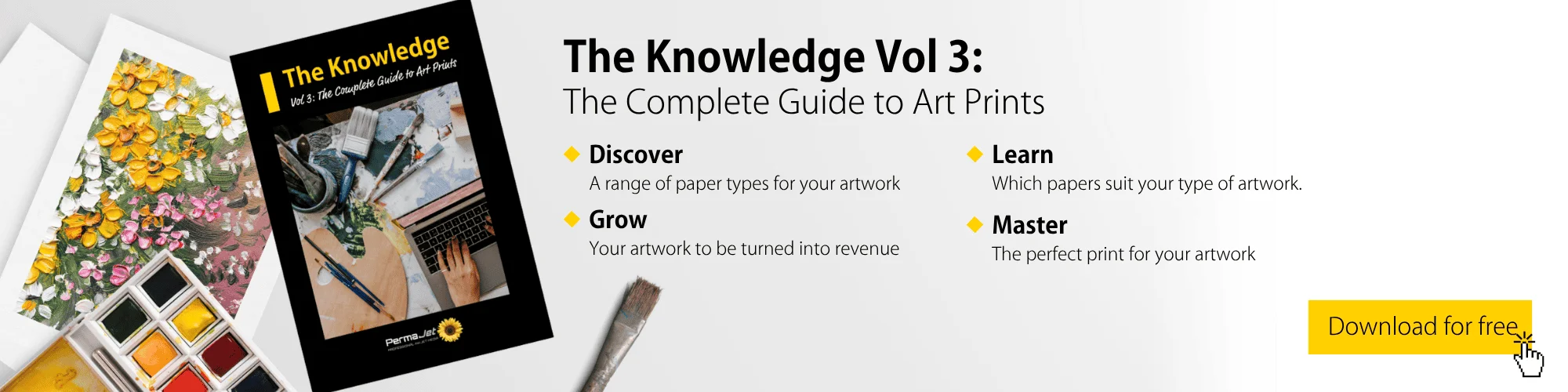
Paper is one part of a bigger process. Our new ebook, The Knowledge Vol 3: The Complete Guide to Art Prints, covers the rest of it.
Written for artists reproducing and selling their own work, it takes you from capturing the original through to the finished, framed print. Scanning and photographing artwork, getting colour accurate, choosing a printer, print settings step by step, and how to finish, sign and store your editions.
It’s FREE, and it’s the guide we wish we’d had when we started printing.